

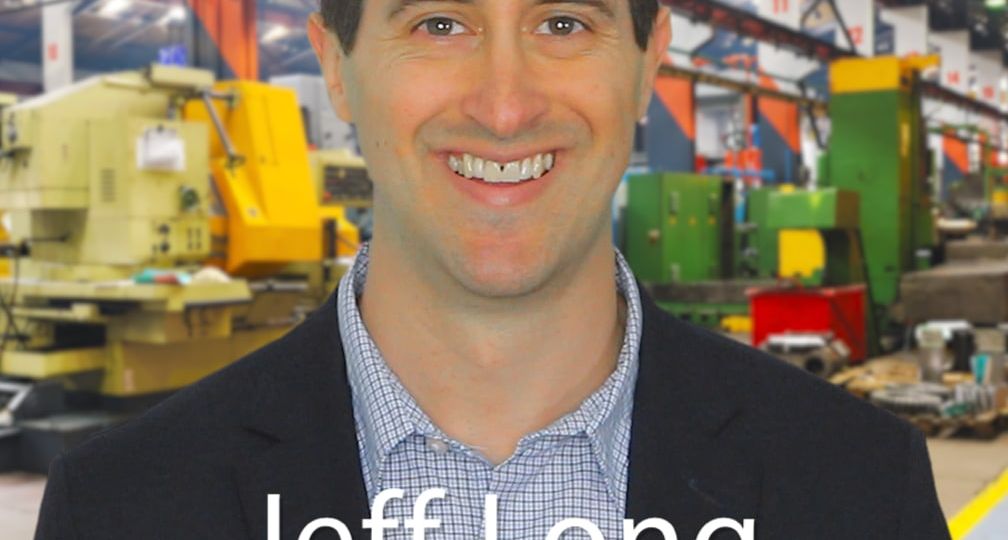
Content marketing for manufactures with Jeff Long
“…they’re doing a lot more research even before they pick up a phone or fill out a form or anything like that. One stat I saw that I wrote down here says that for 67% of buyers; that journey is now done digitally even before they engage with a company…” – Jeff Long
Transcription
David Crysler
Hello and welcome to the Everyday Business Problems podcast, I’m your host, Dave Crysler. In each episode, we talk to business owners and leaders to learn about their story, their business, the challenges they’ve overcome, and the challenges they still face. You’ll hear fresh insights, real talk, and get inspiration to grow your business.
Hey, everybody, so excited today to welcome Jeff Long, who founded True Focus Media, which is a media company specializing in marketing for manufacturers. Jeff, thanks so much for coming on the Everyday Business Problems podcast and spending your time with us today.
Jeff Long
Absolutely. Thanks so much for having me on today, David.
David Crysler
Yeah, super excited to get into this with you because I think in general, manufacturing is kind of an underserved area when it comes to digital marketing. I think a lot of manufacturing companies are wanting to catch up with that and there are obviously some leaders already in the space. You know, I spent more than 20 years in manufacturing, so it’s near and dear to my heart in general, but I think that it is really an area of opportunity. Can you talk just a little bit about how you landed on marketing for manufacturers?
Jeff Long
Yeah, I mean, you hit some amazing points. And so when I started my company in 2003, at the time, I had two business partners and we were kind of fresh out of college and excited for life, you know, all that good stuff and entrepreneurial at heart. So we worked with a wide variety of businesses small, large, single person owned, and big businesses; all of that. But it wasn’t until several years into that company that, I kind of did some looking backward.
Both partners had actually moved on; they had kind of moved out and then moved on. And it was kind of the best partner splitting or going of ways you could ever have, and that’s a whole different story for another day! But anyway, I started to look back and I looked at some of my best projects, best clients, favorite to work with, easiest to work with, best industries, all of that, and manufacturing quickly just jumped to the top.
It was, you know, not really a fair race. And I kind of knew that in my gut, but just going through the exercise. And I think some of it is, a lot of manufacturers are obviously engineering-focused and based, right? And I kind of have a similar mindset myself. So even in my business, I’m looking for, you know, how to improve, how to get better, how to be lean, how to be more efficient. And that resonates with me because so many manufacturing companies are the same way.
And then lastly, like you said, many manufacturers, they’re kind of stuck with what I call maybe the old school way of marketing their sales, right? And that’s fine. But you know, there’s a new way. My friend Greg Mischio talks about what he calls the digital newcomer. It’s a really good article on that old way versus new way and some of the trends in the stats. And so anyway, those are some of the reasons why marketing for manufacturers is kind of near and dear to my heart. They need a lot of help and but they’re good people and easy to work with.
David Crysler
Yeah, I think you really, just in that last couple of seconds, hit it home for me because one of the things I enjoy most about working in that space is just the fact that, they’re real people, right? I mean, they’re real people everywhere, but they’re super approachable. They’re down to earth. They understand, especially when you come at it to your point from more of a process and continuous improvement standpoint.
They understand all of that stuff because they’re doing that continuously throughout their operation. Or at least, have aspirations to continue to do that. So when you can have that similar mindset, it comes back to, “hey, you’re speaking my language, let’s talk about this”. Right?!
Can you elaborate a little bit? You brought up a point with that article in terms of old school versus new school. Can you talk a little bit more about that and some of the areas of opportunity that maybe manufacturing companies aren’t thinking about today? Maybe then also how does that translate to… I feel like we saw such a huge shift with the pandemic where lots of people are just putting out content. And I say it that way because there wasn’t a lot of focus and a lot of cases, people were testing and trying to figure this thing out and everybody’s going virtual so can you maybe tie those couple of things together in terms of, old school versus new school and then how does that come to be in the real world that a company can move the needle forward for themselves by leveraging, what’s happening and the technology?
Jeff Long
Yeah, that’s such a key component. I think a lot of its’ customers, the customers that these manufacturing companies work with, even if they work with through distributors or through other channel partners; OK, so I understand there’s a lot of variables in the whole manufacturing space for the customer, the end-user. But regardless of what we call them, the end customer, they’re doing a lot more research even before they pick up a phone or fill out a form or anything like that.
One stat I saw that I wrote down here says 67% of buyers; that journey is now done digitally even before they engage with a company, you know, for those first pieces of information. So they’re looking for more content, right, that you mentioned, they’re looking for more material.
They have questions, are weighing pros and cons and looking at reviews. And we’re not just talking about B2C, we’re talking obviously B2B in the manufacturing space. It’s no different, so a lot of times when I start marketing for manufacturers, I say, OK, when you make a purchase, what are you doing? And they’ll say, “well, you know, we’re going to YouTube and we’re looking at Amazon. We’re checking this, we’re doing that. We’re, you know…”. They rattle off ten things and I’m like, so you are applying that to your company, right?
Do you have the same model or do you have content that helps that end-user with their research? And they kind of look at me like, “well, well, no, because we’re different”. You know and I know manufacturers have challenges, right?
We all know those, but those are some of the thoughts of the old school which was in person. Those belly-to-belly sales kind of a term. And, you know, a lot of trade shows and brochures and things like that.
Not that those are terrible, but manufacturers are looking to automate and be efficient, and they’re doing a great job on their production floor, but what about in their marketing and sales of a lot of times I see that are wanting a lot.
David Crysler
Yeah, I mean that a lot of great points in what you just said. One of the things that came to mind and you brought it up, the brochures, right? Everybody’s used to the sell sheets and the brochures and you even see it a lot, you know, especially early on when people were developing websites; hey, we’ve got a 26-year history or we’ve got 100-year history and you know what you brought up in terms of they’re not, number one, there not being a big difference between B2C and B2B, I think that is a great point because a lot of times you think of you think that there is a huge difference and there’s not. It’s about recognizing, what do you do as a consumer, whether you’re buying in that B2B space like manufacturers as suppliers, right?
So they are in a B2B consumer role. So how did they evaluate what are the answers to the questions that they’re looking for? Which this whole part was such a great point on your part! It’s then taking those same thought processes and applying them to their own literature, whether that is some old school stuff and or the new school stuff with outreach and content and your website.
I mean, I would imagine that with the amount of longevity that you’ve had in this space, you’ve seen a pretty big shift from talking at people to inviting them into a story and making content to drive people to your website; every touchpoint, making that much more about satisfying somebody questions, meaning the consumers questions versus what it used to be. Can you maybe talk a little bit about that?
Jeff Long
Yeah. And you just said a good phrase here that I want to kind of build-out. It’s being customer-centric, right? So it used to be like you said you had a website, you had a brochure. It’s “Hey, look at us, aren’t we great? We’ve been around for this long. We have great products, great people”, and I trust that your company does but who’s ever listening to this? When everybody says that, it kind of minimizes the impact, right?
Like, I’m proud that as we record, this is my 19th year in business. I’m proud of that. But I don’t know that many people that have hired me and said, “Wow, Jeff started in 2003. I’m going to hire that guy. You know, his team is great”. No, you know, it’s the results. So it’s more about being customer-centric. So it used to be you got to brag about yourself on your website, or your brochure.
Now it’s, you know, are you being almost like an educator. You know, both my parents were lifelong teachers. That’s how they met. Got married. All that good stuff, then college professors and a really cool story. So I look at marketing as more of like, how can we educate, teach, help serve versus how can we knock down doors and beat people over the head with sales and, you know, hit our numbers. So whenever we redesign a website, one of the things we look at is how can we view your website and all your marketing as a learning center? Not a bragging opportunity.
David Crysler
Yeah, it’s key to take it from that approach. What is challenging, at least in my experience in talking with a lot of business owners is; what you said about the longevity, right? It’s cutting through that noise of, now everybody’s talking about story and everybody’s talking about how to be customer-centric. So you have another challenge ahead of you.
I think all of this conversation is leading up to a really great value that you bring to people in an offer that you have. So I want to talk about this, but maybe you can tie those things together of how you guys have helped to kind of cut through that noise with your video value bombs.
You know, again, a great caption of this service, but talk a little bit about what those are, how they can impact, manufacturing companies and also how it really is about cutting through the noise of everybody saying, “Hey, you’ve got to talk about story, you’ve got to invite people into your world”. You have to have, these things as a resource. How does all of that tie together? And why did you create this specific offering to help with that?
Jeff Long
Yeah, great question. So, you know, since I’ve been doing this for so long, you know, again, it’s looking back, OK, what’s worked from a marketing and sales perspective that either we’ve done or other people are doing or whatever like? And how can we be more effective? How can I help more companies? And so it was like, OK, you know, one of the joys of my career, my work is is helping manufacturers increase revenue or decrease the time and expenses it takes to, you know, to increase revenue.
So, you know, when we’re redesigning a website, it’s not that, hey, we want to make it look good. I mean, that’s that’s an obvious thing. Of course, it has to look good, right? If it’s how can we use this tool to be effective and efficient in your goals? And so we work through some of those things. So, you know, we do a lot of website design, development, customization and all that. But on the video side, that’s kind of the other half of my company is video marketing.
You know, I have done countless about us videos, company history, videos, product promos, all that and those are fine. But I think those should not be the first type of video content that a company creates. So that’s why I created this. This service called video value bombs. And like I said before, you know, if 67% of buyers are researching a company before they reach out to a company, and I think that percentage will only grow right. What do companies have?
And typically they have their brochures. They have some good stuff, right? But you know, I always say content is key, but video is king. So with video value bombs, it’s obviously, you know, the foundation is video and kind of the premise is give us 30 minutes and we’ll give you a month’s worth of sales and marketing material. So we have a it’s a three step process. We have a roadmap that we follow. So each month we talk about a different topic. We interview a different subject matter expert and we have, you know, specific direction we’re wanting to go each month so that, you know, at the end of, you know, the strategy, you have different material for different types of buyers, whether they don’t even know who you are all the way through. Hey, they’ve made a purchase or bunches of purchases.
Here’s you know, here’s what to consider. So, you know, the first step with this video value bomb is content creation. We have that roadmap. We have that strategy. Along with it, I recently did a LinkedIn poll of like, why don’t companies create more content or make more videos?
And I gave some, you know, possible choices. Lack of strategy was the number one reason why they didn’t do it. I don’t know if you want to jump in there before I move on.
David Crysler
Yeah, I would love to because it’s really interesting to me. You know what, I again, I kind of brought it up earlier, but I think you saw that a little bit during, you know, especially the early stages of the pandemic where, yeah, you know, all of a sudden everything stopped, right?
Kind of the old-school way. We already talked about this, but no more in-person meetings, no more handing out business cards, no more trade shows. All of that was on pause for the longest time. And so it was like, Well, what do we have left?
We have this platform, whether it’s LinkedIn or any of the other social channels we have, you know, podcasts, we have YouTube. We have all of these different avenues, different platforms to get our message out. But nobody really knew, you know, well, what’s expected?
Like, do I just get on camera and just start talking about my company and say the same types of things like, Hey, you know, we’ve been in business since 1947 and we do this really well and we do that really well.
And hey, reach out to us if you need x y z and you saw this time and time again and it seemingly was just the social platforms were just flooded with this type of content. And what’s interesting about your poll results, for me, is the fact that I think a lot of the reason that you got that is because people tried, didn’t get any engagement, didn’t get anything that they thought that they were going to get. Because again, when you’re on these platforms, it’s really easy to see somebody making one post right from the outside looking in.
Somebody made one post and they get 500 comments, they get 30,000 likes. It gets shared, you know, thousands of times what most people don’t see is what has led to that in terms of ramp-up, right? And so my whole point with this is I feel like your results are the reflection of people trying, failing and saying, I have no idea what to do. I need help laying this out. And to your point, in terms of why the strategy is so important is because it is not a one post viral post. Sometimes that magic just happens, right?
Sometimes lightning strikes. But for the majority of people, for the majority of businesses, for the majority of the content that’s being created, it is a very strategic, well thought out plan that has different components, different parts that make up the whole, which is then where you start to see this lift over the long term. Right?
Jeff Long
Yeah. You know, and I think. Some especially, you know, certain people, whether it’s maybe an executive or somebody is like, well, you know, give us the metrics, right? What’s the metrics on that podcast or that video or that?
And I did it like I want is precise metrics as possible. But it is a long-term thing, you know, so it’s not going to be, hey, we made one video and it didn’t work. Or we, you know, it’s like, Well, OK, I mean, do you make one sales call and then call it a day, you know, if it doesn’t, if you don’t get a lead, no?! I mean, you, you keep trying. And the good thing with online content, whether it’s podcasting or videos, whatever, it’s a content snowball, you know, so the more you add, the bigger it gets within reason.
And like you mentioned, like you need to have a strategy in place where like, where are you going and how does it align with your strategies? So that’s key.
David Crysler
Yeah, I mean, you don’t, you know, kind of to your point, right? You don’t just wake up and you’re successful, right? You have a vision of what success looks like and you take steps to get there. And I really love what you said about, you know, kind of that immediate the immediate metrics and reviewing those and kind of having that satisfaction.
But to your point, you brought up, you know, if you make one sales call and don’t get a hold of your prospect or customer, what have you? You don’t just not call them ever again. And so I really like that because often times again and I feel like it’s kind of part of the comparison culture that we live in today, it’s very easy to see other people’s success, especially when it comes to social media posting and followers and all of that stuff. And you know, that’s not really where it’s at. It really is about laying out the strategic plan following that plan.
Sure, making changes and tweaks along the way, just like anything that you’re putting in place in terms of, you know, some sort of sales strategy or prospecting effort in then monitoring that over time. And as you do that, you get better at tying it back to what the real mission of your company is.
You get better at the creative, you know, and even people that have really big budgets, you know, oftentimes and I love you, get your take on this. But oftentimes I feel like, you know, somebody that has a really big budget may in some senses be kind of hurting themself because the production value is so great, it feels inauthentic. And a lot of the really great, you know, content that I see out there is literally somebody with the cell phone, you know, walking or in their car, and they have 30 seconds. They have a minute and a half of just a crazy good point, value-driven.
And it’s like, Wow, OK, this is something to think about. I need to, you know, I need to follow this person or I need to kind of keep this person in, you know, in my thoughts and my wings, because at some point I’m going to need a little bit more help. I’m going to need a little bit more support. You know, what have you? So have you seen the same thing with kind of the low budget?
Jeff Long
And I think it’s I think it can be a good thing, right? It’s like kind of YouTube and smartphones have reduced the quality expectations of videos. And so it’s more about the quality of the content. You know what’s being said and all that. But I do think it’s kind of a both.
And, you know, I do think some companies want to showcase how big they are. Massive all that. And then other companies see that and want to do business with that, right? So to me, it’s a both. And you know, I I think there’s value in both. But at the same time, I think that opens the door to the smaller companies. It’s like my friend Curt Anderson wrote the book, You know, stop being the best-kept secret in town.
You know, so many manufacturing companies, you know, they’re like, Oh, we’re the best secret around, you know, and it’s like, Well, you can. You cannot be that, you know, it’s fairly easy with, you know, video and podcast and other stuff.
But I think where manufacturers have a tremendous opportunity is most manufacturers aren’t doing any of this right. They’re not podcasting or doing, you know, videos or other type of marketing materials. So to me, as I see this and based on my experience, the opportunities are wide open.
So it’s those companies that are jumping on this that are having some really good success and there’s still huge opportunities out there. It’s not a done deal by any stretch, right, especially for manufacturers.
David Crysler
So, yeah, I totally agree with what you’re saying. I mean, it’s kind of, you know, as you’re talking, I’m thinking, you know, it’s it’s just that thought process of there isn’t one size fits all. What works for one company isn’t necessarily going to work for another company in terms of, you know, whether you’re talking about production value and to your point, there are definitely opportunities where you want to showcase at a very high level with a lot of production value, certain aspects about your company, about, you know, your capabilities, all of those types of things.
You know, one thing that popped into my mind and then I do want to circle back to the video value bombs to kind of wrap up that discussion. But the one thing that kind of jumped into my mind in terms of not a lot of manufacturing companies are doing a lot of this. And I’ll never forget, you know, when the kind of light bulb went off for me, you know? And again, I spent more than 20 years in manufacturing, so somebody told me at another marketing company, it’s like, you have so much opportunity to make content you just don’t know yet.
And I just remember thinking to myself, like, What are you talking about? Like, there’s nothing, nothing interesting about what I do. You know, there’s no opportunities to video something and then talk about it, like, wants to see that?
And it was interesting because I kind of remember this specific moment that that clicked and started to just kind of have fun with it and show different aspects of the businesses that I was involved in. And boy, before you know it, you really do have opportunities all around.
And I think about manufacturing specifically because it’s just full of cool equipment. It’s full of great people. It’s full of, you know, intricacies that you know, most people never necessarily want to learn but it’s interesting. So if you showcase that in a unique way and can and can kind of bring that back to your value proposition, it’s tremendous and you can build a big audience very quickly. You know, it’s it’s like the why is the show how it’s made popular? Right, right? Because people are interested, like whoever knew how you manufactured matchsticks, you know, like whoever knew.
It’s just it’s wild. But that’s the point of, you know, of doing that. So let’s kind of tie that back into the video value bomb’s kind of moving that forward in terms of, you know, specifics. How can these help manufacturers kind of lay out the strategy and start giving them some know real content to leverage to start building out, you know, their audiences and start engaging, which I think is, you know, a huge missed opportunity by a lot of people. But that engagement component, once you start building the content and start creating conversations.
Jeff Long
So, yeah, absolutely. Yeah. So the first step is that creation, right? So we have that roadmap and, you know, not that, you know, a company can kind of think through, OK, what content do we need to create, right? Like, what’s an executive need to know?
What’s an engineer need to know? What’s an operator, need to know and create content there, right? Like you could do that internally. You don’t need my help, necessarily. So content creation is number one. Number two is content multiplication.
So once we do this, you know, short video interview, we multiply the content, so we kind of chop it up. Those are the video value bombs. And then we also have other types of multimedia content. So we have so rich articles based on each video.
And there’s other different types of multimedia that we create for that. That’s kind of customer-centric that gets, you know, eyes and ears engaged. And then the third step is distribution. So we have a list of like, I don’t know, 40 plus different places.
We can post and repost that content every single month, you know, so we look at, OK, where is your ideal customer customers, you know, and where can we put that content? So let me give you two quick examples.
One: this is one of my favorites because everybody sends, you know, gobs of emails every day. What if your company had a in your email signature had a little blurb about, Hey, check out our latest video, quick tip for our latest video value bomb or whatever you want to call it, and it links to your website, right? Simple. I mean, how many employees do you have times? How many emails you send every day? Boom. I mean, that’s hundreds, thousands. It’s et cetera. The other is think about different like publications, trade shows or other manufacturing organizations.
Typically, they love having and promoting content, especially if it’s not. Bragging or boasting about your company? Right, so again, going to that customer-centric, going back to that educationally focused material, if it helps the greater good, the greater industry, they’re going to promote that like wildfire.
Some of our the companies we’ve worked with that’s been like gasoline on the fire. So again, it’s it’s that three steps, it’s creating the content, it’s multiplying it into different modalities and then it’s distribution. Where can we put it every month and repost that so that the customer, your ideal customers can see that.
And it’s all about showcasing your expertise, demonstrating your products and kind of let that tell that story or whatever. So it’s less about, aren’t we great? It’s more about serving and helping your customer.
David Crysler
Yeah, that’s awesome. I, you know, as I was listening to you, I think a couple of points really stuck for me. Number one is identifying where your customers kind of live and hang out, right? And I think that can be challenging because it’s easy to say, Oh, hey, everybody is on Facebook. Oh, hey, everybody is on LinkedIn. And you know, it seems like there’s a new platform that’s born, you know, all of the time.
And there’s so so you. So there are a lot of opportunities. But the other part that you brought up that I think sometimes can be missed, it’s in plain sight, right? Like how many emails are we all sending all day long and how do we leverage those things?
Because obviously the majority of those emails are going to be, you know, prospect and or customer correspondence. Right, especially the larger manufacturing organizations that you have. There’s a lot of customer service, you know, teams in place and sales support teams that are in place that have a lot of correspondence throughout, you know, every day, every week.
And so to your point, like, that’s a great place to start and again, kind of doing it in a meaningful way. I mean, that’s we come back to that, which is the strategy side of it, because in my mind, that’s really the only way, you know, it’s like creating a process or a system, right?
If we don’t write it down and create some formality around it, it’s going to be very hard to track what the metrics are. It’s going to be very hard to impact, you know, meaningful change to that. So kind of coming back to that strategy part of it.
Taking meaningful steps towards getting that content out and getting it in front of where you believe, you know, kind of your customers are hanging out and living. The other thing I want to chat about just kind of briefly because again, I feel like this is a big opportunity, a big missed opportunity by a lot of people not even specific to manufacturing, but because a lot of the manufacturers are just kind of getting into this more content related marketing and digital age. Let’s talk about the engagement, right? Because yeah, this to me is a huge missed opportunity by most people because you, you, you think, Well, what’s the point of me just going back and making a “hey, thanks for commenting on my post, or hey, thanks for engaging”. You know, one of the best examples I’ve ever heard was if somebody walked, let’s pretend that you’re manufacturing business is just a brick and mortar retail business.
You know, if you walked into that as the consumer and said, Hey, good morning, how’s it going? And the clerk just looked up at you and then turned around and walked away. What would your what would your impression be right?
And we don’t think of it that way in terms of social media because it’s just somebody on the screen, right? But that, to me, is such a huge missed opportunity to make a connection, and it doesn’t have to be, you know, a back and forth conversation.
But you know, what do you what do you tell people that are just getting started? How do you encourage them to really take a look at that and to not miss out on, you know, on that opportunity?
Jeff Long
I love that example. That’s amazing. I’m going to have to borrow that.
David Crysler
I’ll give you go, no, go ahead because I borrowed it from somebody that sorry. And I was like, my mind was just like, Oh my gosh, I’ve never thought of it that way.
But it just it really resonated because everybody knows the feeling of going into a place where you’re expecting a warm welcome in customer service. And then all of a sudden it’s like, Oh, geez, what did I do? You know, so it’s it’s easy to connect to feel free to to borrow any time, right?
Jeff Long
No, that’s good. That’s good. Yeah, I think, you know, I’m in my forties, you know, so I’m kind of in-between, you know, but I still have this kind of old curmudgeon get off my lawn type of guy in my head.
So. So I’m not like on social media all day long. In fact, I have to almost either schedule it or do it on purpose. But I know that the conversation is happening. Let’s say it with LinkedIn. That’s obviously one of the more popular platforms with manufacturers.
The conversations already happening there. So do I want to join it or pretend it’s not there? I mean, I’ll let each listener make that call, so the other thing is, I have gotten some of the most rewarding relationships in the last year and a half because I mean, just you and I, David, right?
Like we met each other virtually and we still we’ve only met each other virtually and like, how amazing is this that we can have this conversation and, you know, other opportunities? So I have been rewarded tremendously, not just financially, but like with just relationships.
In fact, before a call, right? We were talking about, Yeah, you know, it’s always my goal when I hop on a call not to sell, but to listen, to learn, to connect. And then amazingly, not so amazingly amazing things happen, right?
You know, some deals happen, not all the time, because that’s not necessary. So yeah, it’s just I. Relationships are everything. And being a human is everything. So yeah, when somebody comments on a post or even with, you know, on the website side of things and we ever reevaluate a website.
Live chat is something we introduce. So, you know, people want immediacy. So if they’re doing a live chat with your company, are they getting responded to in a timely manner? Just like if they were to walk in or call or any of that right, it’s all the same.
So yeah. You know, I think the opportunities are there. And then one last thing with where social media kind of a cool marketing tip here is whenever you go to an event or a trade show, see if that trade show event etc is listed as an event on LinkedIn so you can search that it’s pretty simple.
And then you can see who’s going, who’s liked it? Who’s commented, I just did this a little over a week ago, I reached out. It was a smaller event in Cincinnati, kind of my region where I’m from. And I reached out to there were probably under, I don’t know, 30 people that kind of commented that they were going, even though the event was much larger. And so a comment, Hey, I see you’re going to be there, I’m going to be there. Cool. I hope it’s a good show for you. No agenda, right? Somebody reached out to me from a Fortune 500 company was talking about, you know, this video value bomb strategy and some other things. And it was just like, just because I did a simple little, Hey, I see you’re going to the show, can’t wait to see you there. I hope it’s a good one, you know? And so tomorrow I’m going to another show Gossiger fest in Dayton, Ohio.
And so same thing reached out to some people. Who knows what will happen? Maybe nothing. Maybe something. But you just never know. So yeah, that to say kind of wrap a bow. Yeah, the digital side, there’s tremendous opportunities. I think some people think, well, in-person is where it’s at the digital side. That’s just for the kids, right? But I would highly, highly disagree.
David Crysler
I agree with exactly what you just said. And you know, it’s interesting because that’s why to me, that perfectly sums up working with a lot of manufacturers is it’s not just for the kids anymore. Hey, everybody’s doing it, man. So, you know, like, let’s remember that social media. Let’s remember what that first word is, right? Let’s be social on there. And it’s not necessarily about, you know, to your point.
Number one, I really love that tip. I probably would not have thought of that. So I really love that tip because it is so easy to access information. It’s a great way to just get engaged with a community of like kind of minded people.
You go into the same show and, hey, you know, who knows where that comes, you know, ends up winding out, too. But yeah, just be open to those different types of opportunities. Because again, to your point, we would not be having this podcast.
We would have never, you know, been on, you know, a few other calls and we would have never, you know, developed kind of this relationship and, you know, friendship because we were both closed off to the fact of, well, I don’t really see any value in, you know, connecting with Jeff and, you know, so on and so forth. So yeah, it’s you know, let’s remember that social media is about being social and you know, you wouldn’t walk into any type of in-person networking event and go to shake somebody’s hand or, you know, say hello to them.
And again, you’d expect a hello. Right now, at the very least, right, you do the hello. In return, you would expect somebody to just kind of scoff at you and turn around and walk away, you know, so it’s.
Jeff Long
And here’s how to supercharge that. That little tip I gave about reaching out to, you know, different people on LinkedIn who are going to events or trade shows is what I did is and I think you’re only allowed what 300 characters or something. So anyway, yeah, a simple message. But then I grab the URL from a piece of content. I post it on LinkedIn, which was a video, right? So I said something like, Hey, I typically like to give. Different sales and marketing tips about video, blah, but whatever.
And then I put that little LinkedIn URL in the direct message to each person, and LinkedIn will show you the video. So it has a little, you know, a couple hundred characters, you know, it was three sentences, whatever.
Yeah. And then right below that, there’s a video of Jeff Long in their message box. And yeah, granted, it wasn’t a personal message to Bob and Sally and mayor, you know, but but it was helpful content. So again, you want to supercharge your your reach outs on LinkedIn or other platforms, give a helpful piece of content and you’ll be amazed at the interactions that that can happen from that.
David Crysler
Yeah. I mean, you know, it goes back to, you know, the whole thought process of delivering value first and not asking for, you know, necessarily for a sale. But, you know, even in traditional kind of sales roles, I think, you know, again, back to what we said earlier, right? Think about how you enjoy to be sold to and everybody’s selling something. OK, so don’t don’t kid yourself that, you know, people are just out there.
I mean, everybody gets that part of it. But there are definitely ways to try to put your best foot forward in terms of helping people and not expecting something in return. And that’s a great example of it. You know, I’ll give you one example of something that I’ve I’ve done from a sales outreach process, which again, I’ve seen some good impact with. And that’s simply, you know, we’re talking about taking video that’s simply introducing a personalized video into some of those outreaches and touchpoints. And on top of that, giving, you know, value because again, email; how many emails do you get a day?
I know how many email addresses I have. It lets, let’s just talk about that. You know how many email addresses I have, let alone how many emails I give and get per day. So it really is about trying to connect with people videos in an amazing way to do that again, continuing the conversation, you know, via those engagements and to your point, reaching out when you see a potential opportunity. Because again, a lot of people don’t recognize that as an opportunity. Just make a connection. Say, Hello, hey, I’m Jeff, here’s what I’m all about. Maybe I can give you a little bit of value or provide something maybe you haven’t contemplated before. So that’s tremendous, man. I really appreciate you sharing that. You know, as we kind of wind down this episode here, I’d love to know you’ve been in business for a really long time, which is a tremendous success in and of itself.
Because when you look at the statistics of business, you know, kind of founding to making it past year three, five, ten, 15, right? It’s the odds are incredibly stacked against you. Right? So number one, congratulations on being a successful entrepreneur and business owner and kind of number two.
What is one of those lessons that you had you only known five years ago, ten years ago? What would you share with people that are out there? And again, this is maybe bigger than or broader than manufacturing, but I always like to ask this question because everybody has such a wealth of knowledge.
You’ve had different experiences, different challenges, different setbacks. So what’s something that you could share with the audience? Manufacturing specific or not, I just love to hear, you know, maybe one piece of advice, one lesson that you’ve learned that’s really kind of helped shape where you’re at today.
Jeff Long
Wow. Wow. Oh, man, where to start? I’ll try to boil it down because I’m a lifelong learner. I love podcasts and audiobooks and all that, you know, courses and all that good stuff to to better myself. So there’s a lot I could say.
I think the two things that have maybe helped me to be a success are, I guess you could boil it down to two books, really. And I wouldn’t even say these are necessarily like my top two favorite books.
But right? Blue Ocean Strategy is really was kind of a game-changer in my business. Like again, instead of being a general marketing agency, which there is a bajillion out there, how can I specialize be unique? And so again, in manufacturing, which there’s a lot of marketing people in manufacturing, but then this video value bombs thing and other, you know, other services we have are a little unique. So that’s one is the Blue Ocean Strategy book. Very good book. And then secondly, a book I’ve read twice this year, actually twice in one month, which is pretty rare for me.
It’s called who, not how. So a lot of companies are thinking, How can we do this? How can we do that? And they probably have a lot of resources and abilities to do that internally. And that’s fair. But sometimes you need to find, you know, who’s the person that’s already doing this in?
Who’s the expert? And maybe we engage them for a time. So I’m doing that myself as well as, you know, other companies are doing that with me. You know, I’m somebody who, but I’m also looking. Who’s four for me, so who not now is a fantastic book, but like I said, I’ve read twice in one month.
David Crysler
That is awesome and I really appreciate that I too am a lifelong learner. I love, you know? I never said I was a huge reader, but then I discovered audible, and all of a sudden it makes it much easier to consume books.
So I really appreciate both of those recommendations. I will definitely be adding them into my into my wish list. I have heard of the Blue Ocean Strategy, have not read it yet. The other one I’ve not heard of, so I’ll have to definitely check that one out.
So I appreciate you sharing those and kind of the lessons that you’ve taken away from there. Jeff, if people want to reach out and find out about you, the video value bombs, you know, kind of where’s the easiest place for them to find you?
Jeff Long
Yeah. So they can go to video value bombs, dot com, or that’s kind of a redirect to my company website, which is true focus media dot com. So they can learn more about me and and I and obviously, you know, reach out on LinkedIn.
I try to be engaged there, try to help and connect and would love to do so to anybody that reaches out.
David Crysler
Awesome, and I’ll make sure to add all of that into the show notes for people to make it easy for them to reach you. Jeff, thanks so much for taking your time to be on the podcast today really appreciated some really tremendous insights. And I think that you really delivered some value for people out there that are listening. So thank you again.
Jeff Long
Well, thanks so much for having me on the show David.
David Crysler
Thank you so much for listening today. If we brought you any value, please rate. Subscribe and share our podcast. Also, be sure to connect with us on social media by searching at the Crysler Club.
Until next week, I’m your host, Dave Crysler.
Company Website:
https://videovaluebombs.com/
LinkedIn Profile:
https://www.linkedin.com/in/jeffdlong/