

how to improve improve customer onboarding process
The initial interaction our customers have with our businesses sets the tone for our entire relationship. This is why I’ve found focusing on the front end of the business is often a great way to not only establish a strong foundation of continuous improvement internally but to also increase value from our customers’ perspective.
Understanding Work in Process (WIP)
A key concept in Lean Manufacturing is reducing waste. There are 8 recognized wastes to be on the lookout for that we can remember by using the acronym: D.O.W.N.T.I.M.E.. One area that we can easily identify waste within is our Work in Process or WIP, which refers to the time items spend waiting between steps in a process. Reducing WIP not only speeds up our onboarding processes but also improves productivity, reduces errors, and enhances cash flow, all while contributing to a “Wow” experience for our customers.
Steps to Implement Continuous Improvement in Onboarding
1. Process Mapping Activity
The first step in optimizing our onboarding process is to visually map out each step, from the initial customer contact to the final stage where they are fully onboarded. This visual representation helps identify any inefficiencies or bottlenecks in our processes. Here is a free video resource to help you get started with process mapping.
2. Identify and Prioritize Improvements
Once the process has been mapped, the next step is to identify and prioritize areas for improvement. Look for steps that can be eliminated, automated, or simplified. We can use a process improvement prioritization tool to help us focus on changes that will have the most significant impact on efficiency and customer satisfaction while requiring minimal effort or capital to implement.
3. Implement, Measure, and Monitor
After identifying the improvements, the next steps are to implement these changes, measure the outcomes, and monitor the process for any necessary adjustments. This cycle of continuous improvement: Plan > Execute > Review > Revise > Repeat, or our Foundations Framework, ensures that the process remains in a cycle of review for potential enhancements as inputs and requirements change over time.
Examples of Continuous Improvement in Onboarding
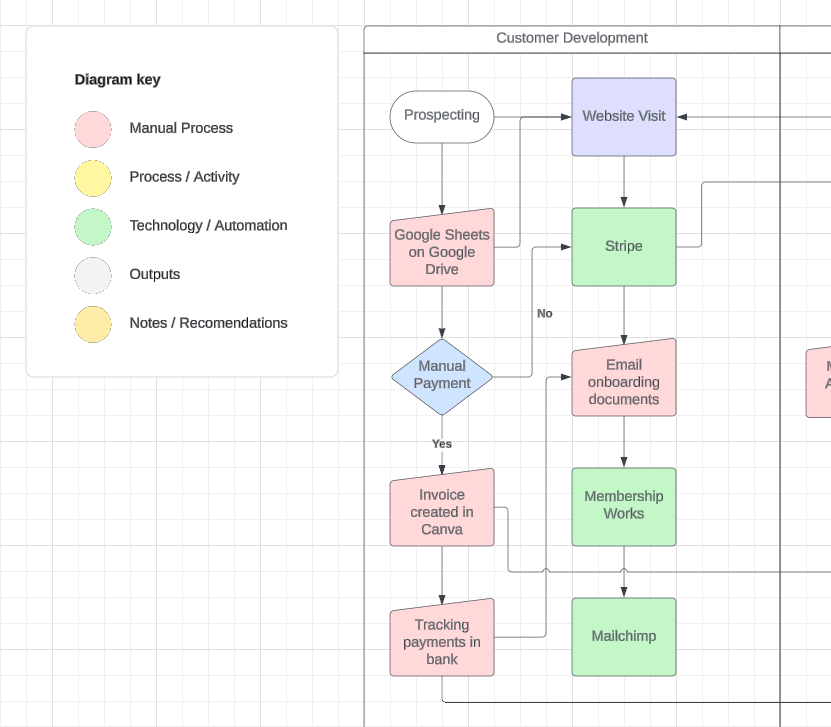
- Manufacturing: By mapping the onboarding process, several manual processes were identified as opportunities for improvement. Implementing changes reduced the onboarding time from an average of 5 days to just 2 hours.
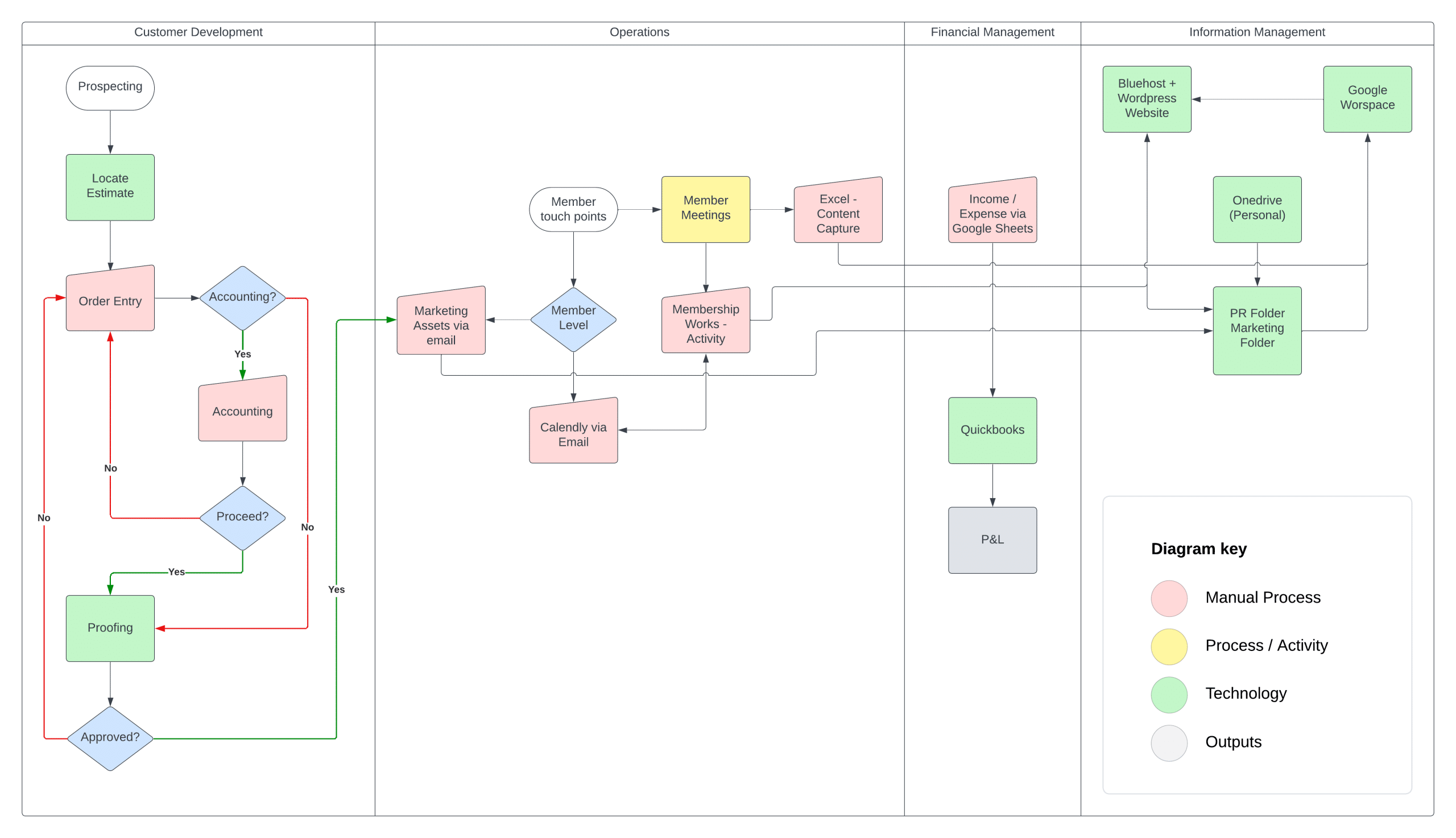
- Professional Services: Similar process mapping identified manual steps that, once optimized, reduced onboarding from an average of 3 days to merely 1 hour.
Final Thoughts
Implementing continuous improvement in the front end of our businesses is a great way to show our dedication to streamlining our operations while increasing value for our customers. By focusing on reducing WIP and optimizing each step of the onboarding process, we can not only impress new and existing customers but also set a precedent for operational excellence throughout our organization. This approach not only enhances the customer’s first impression but also lays the groundwork for sustainable growth and a culture of continuous improvement.
That’s it for today.
See you all again next week!
Dave
Ready to see what's holding your operation back?
Take the Operations Diagnostic: your top 3 priorities, plus a quick win for each. I personally review every one and send your insights within 24 hours.
Already know you need a hand? Let's Talk → 20-Minute Strategy Call