

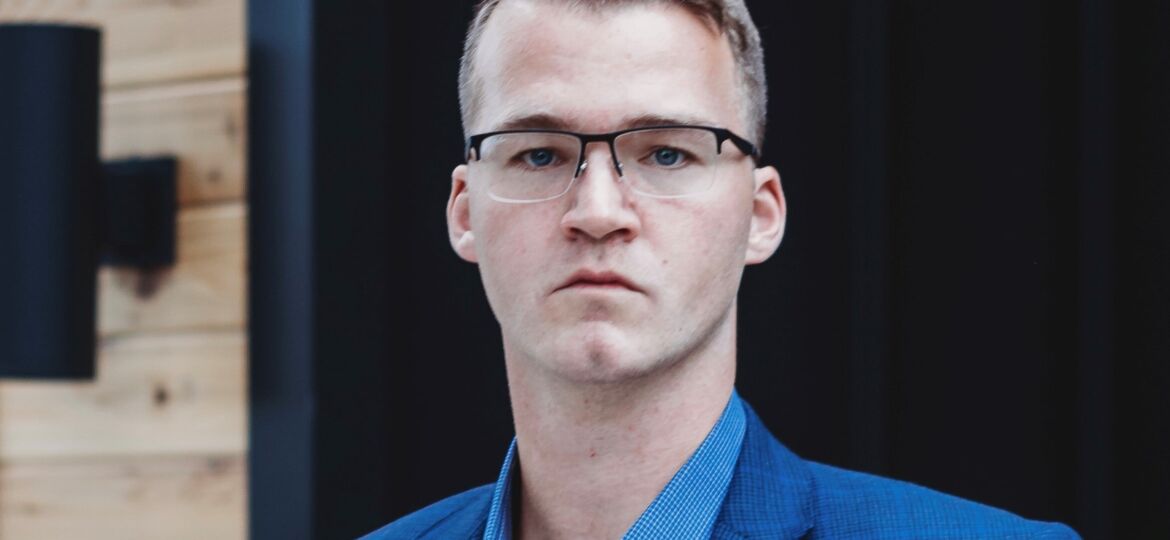
Networking your way through life with Logan Massop
“…I had to get myself out there. Nobody was necessarily doing it for me…” – Logan Massop
Transcription
Dave Crysler
Hello and welcome to the Everyday Business Problems podcast. I’m your host, Dave Crysler. In each episode, we talk to business owners and leaders to learn about their story, their business, the challenges they’ve overcome, and the challenges they still face. You’ll hear fresh insights, real talk, and get inspiration to grow your business.
Hey everybody, so excited today to welcome Logan label. He is a LinkedIn fanatic and packaging sales professional that helps CPG brands improve their shelf appeal and connection to consumers.
Logan, thanks for joining me on the Everyday Business Problems podcast.
Logan Massop
David, thank you for having me and for the wonderful introduction. I appreciate it.
Dave Crysler
Yeah. So, we have a lot of things in common, print being one of them. I spent a long time in my life, more than half of it related to print. And so, you and I connected via LinkedIn because of what you do for work. So why don’t you tell everybody just a little bit about exactly what you do to help bring consumer product goods, brands, improve their shelf appeal and connection to consumers?
Logan Massop
For sure. Absolutely. So, I mean, packaging sales professional; I sell printed labels, shrink sleeves, folding cartons. I’ll work with anyone from a print buyer who could be in a traditional buying role or a creative director.
Anybody who’s kind of overseeing, you know, branding, whether that be for packaging, or for website design, et cetera, or with graphic designers, which are just people that are under the creative director and try to come up with, you know, print methods and technologies that could help them further develop and enhance, you know, what their brand looks like on the shelf, as well as trying to figure out ways to engage with people through e-commerce, you know, and be memorable that way.
So obviously, the traditional buying experience for consumers is you’ve got a price in mind, you have a product in mind, and you see it on the shelf. You instantly recognize it. You pick it up on the card. Don’t even think about it again. And obviously, every new startup wants to disrupt that pattern of thinking. Right? They want to say, oh, what’s that over there? Let me try that instead.
And there’s not always an exact science to it, because, you know, designers want to get as crazy as possible and printers want to be as conservative as possible. And in some cases. Right. And you want to do something realistic, but you also want to push the boundaries.
And my job is to try to mediate between the two and try to make sure we can actually do what the designer is intending.
Dave Crysler
I love that. I love the mediate part of that because it really is what you end up doing in a role like yours.
You know, again, kind of having lived that life for so many years. I completely relate to what you’re saying from that standpoint, having somebody say, well, gee, why? Why can’t we do this? It’s like, well, you can do that.
We can probably do this, this, and this; and that’s going to deliver, you know, a similar result, yet, you know, not having the printers yelling at you for in production. So it’s ah, I love that. Talk a little bit, Logan, you know, because again, I alluded to this, but, you know, you and I really met via LinkedIn, kind of cold network, I would call it a cold introduction to each other. I think you had some really great posts on there, and maybe I made a comment or something. But, you know, how important is networking been for you in your career, what you’re doing to grow your role, your position? What’s that really been like for you?
Logan Massop
Sure. Well, networking has been, you know, the most important piece of everything I’ve done professionally. Frankly, the person that got me into printing originally, I had actually met in college. I had a night class. So, it was business calculus or something like that. The VP of sales for a local label printer happened to sit right next to me in the class. You know, there was a pretty vast age difference between us. He was mid-forties, you know, I’m twenty-one or so.
And we just, you know, became friends, you know, throughout the semester talking, you know, helping each other with projects. And then finally the job offer came and went to work for them after I had graduated and done an internship.
And almost six years later, I’m still in the industry. I’m still very good friends with him. And it’s been fantastic. And the same goes for, you know, sales. Now, if you meet somebody, let’s say, like, you know, small CPG startups, you know, you work well with one, your network and meet others.
If you treat them well, generally, word gets around and then they’re interested in potentially working with you as well. And obviously, it’s not always a monetary benefit that your large. And for you, find people that you enjoy working with, right, because you want to make it, you know, somewhat mutual between the two to enjoy working with me, I enjoy working with you. Things are going to go a lot smoother when there is the inevitable bumps in the road.
Dave Crysler
Yeah, I totally agree with you there. You know, I think sometimes, especially when you’re just starting out right and whether you’re in a sales position like you are a business owner, like myself, an entrepreneur, I think sometimes you get into this. I need to make connections. I need to network. But maybe I think subconsciously, you know, maybe doing it from the wrong position. And what I mean by that is, you know, you want the results, right?
You want to generate conversation. You want to be able to help people. And in that kind of internal struggle, you know, either you don’t come across as genuine and you come across as salesy. And obviously, you know, we both know how that typically works out.
Or in some cases, you kind of get frustrated because you’re you know, you’re making good connections. And, you know, maybe there’s a really superficial high-level conversation happening, but there’s no deep connection yet. And so I’ve found that people can get discouraged pretty quickly.
What are some of the things that you do to kind of be consistent, be relevant and just show up and be patient is really the question. How do you be patient in that networking process? Because it is not a, you know, a set formula and you can follow a process to do network networking effectively.
But what I find is it’s always different, right. So every relationship kind of ebbs and flows in its own way. How do you stay patient and, you know, make sure that you’re showing up consistently during that networking process?
Logan Massop
Sure. I mean, in general, being patient in general is very difficult. I am in general a very impatient person. And I’ve definitely learned, you know, throughout the past five, six years, you know, just to believe in what you’re doing, you know, and that’ll get you through the lulls of networking and sales and know your professional career, you know, really is just try to be as active as possible. Listen to people and every opportunity that comes your way, take it because you don’t know where it’s going to come from. Right, because you can put yourself out there as much as possible.
You’re just waiting for somebody to reach out and connect, you know, whether they’re a potential customer, potential friend, business partner, whatever it might be. You’re just looking for people that, you know, resonate with you. Right. And, you know, you can have a good conversation with them.
You want to work with right at whatever capacity that might be. You just have to be open to the possibility. And that’s what I’ve learned, you know, over so many years. And I played football in high school. I was a very shy kid, you know, and I had to get myself out there.
Nobody was necessarily doing it for me, you know, and that’s how I ended up playing college football was by essentially cold emailing, you know, local colleges and colleges in the Midwest. And that’s what worked for me. You know, and generally, I wanted it that bad where I was like, I don’t care, you know, what I have to do, to do it. This is how I’ve got to put myself out there to find something.
Dave Crysler
That’s awesome. That’s a great story, because, you know, the phrase, you know, nobody’s coming to save you. Comes to mind, right?
Logan Massop
Absolutely.
Dave Crysler
It’s like that being a business owner. And, you know, people that I work with, it’s like nobody’s showing up to do the work for you. So if you really want something, if you really want to expand your network, nothing is stopping you, you just have to put in the work. You have to show up every day. You have to send messages. You know, you have to try to connect with people. And you try you know, you have to be genuine in those efforts.
And over the course of time, of showing up every day and putting the work in, you know, it’s going to pay off in dividends. And it might not be this afternoon, might not be Friday, you know, but over a longer period of time, it does work.
This stuff does work when you put in the work and you show up consistently, so yeah.
Logan Massop
Absolutely.
Dave Crysler
I love that.
Logan Massop
And I think that there’s a lot to say about, you know, not putting a deadline on whatever you define to be successful. Right. Because you don’t know when that’s going to come.
Dave Crysler
Yeah.
Logan Massop
You just have to continue to believe in what you’re doing. And if that’s what you truly want to do, you’ll continue to do it until you finally feel that feeling of fulfillment or success, whatever that feeling might be, where you’re like, yes, this is what I’ve been trying to achieve. And then that’s a fleeting moment, you know because once you get there, you’ve got to continue to keep rolling.
Dave Crysler
Well, that’s just it. I think, you know, it’s a great point, because I think for a lot of people, you know that. It’s not a destination, right, you don’t achieve that. I mean, you can achieve milestones on your way to, you know, your bigger goal and all of those things, but to your point, once you get there, it’s like, OK, now what?
So it’s very much looking at every situation, every attempt at-bat if you will, you know, or every play, if we want to talk about football. But, you know, it’s very much about looking at each one of those things in the greater picture of what you’re trying to achieve and saying like, OK, well, maybe this was a win.
Maybe I just learned something here and I need to go back and revise my process and now I need to move this forward. But yeah, when you get there, it’s just like, well, what’s next? So.
Logan Massop
Right.
Dave Crysler
So it’s very much about playing that out in your you know, when you’re in your business, in your daily life, it’s the same way. You know, it’s very much a journey. And you have to enjoy it. And when you stop enjoying it, you start putting in the work, you stop showing up. That’s when you know, you really need to make some significant edits and some significant changes because, you know.
That’s just what it did. So you’re either on your way to something and you’re going to continue to win and learn during that journey, and when that changes, you need to change. And that could be a career that could be closing a business and opening a new business.
There is no set answer for it. So I. Yeah, I appreciate that part of what you’re saying. So tell me, Logan, I’m always curious to ask this question, but, you know, what does success look like to you? How do you measure that?
We’re just kind of got done talking about this. But, you know, to define it a little bit more, what does it look like for you?
Logan Massop
Sure, in terms of visually speaking, I don’t know necessarily, but what I can Idema success is, you know, a feeling, you know, like I’m doing what I love. I can be myself while doing it. And I don’t have to fake, you know, and pretend to be something or somebody else. I think that know there’s been a lot of glorifying of, you know, everybody does it this way.
You know, so you can have, you know, the brand new BMW, the big house, the big paychecks, et cetera. But that doesn’t necessarily make everybody happy. You know, some people it does. I think there’s a lot of people that aspire to look successful.
But in general, I would say the person that can be themselves is very happy doing what they’re doing and continually brings it every day. And, you know, we all have off days. Even the people that I would deem as successful.
You know, but you continued to push forward and onward. And that’s changed, obviously, as I’ve been in, you know, the professional world a little bit longer. Obviously, when I first started working and in sales, I was like, I want the BMW, the big house, and the big paychecks.
Dave Crysler
I totally get that. I, you know, having probably a similar kind of career trajectory, I would say the same thing. But I think you framed it up really nicely. And, you know, the older that I get, which I never thought I’d say a phrase like that, but the older that I get, you do realize that it comes down to waking up, being happy.
And yes, there’s some financial responsibility that kind of goes along with that. And you want to have a certain lifestyle and you know, and all of those things. And having the nice car in the big house and the big paychecks, all of that is great.
But when it’s at the sacrifice of that happiness, right. To your point, kind of when it’s at the sacrifice of that, that’s when you know that you’ve got to really make a change. Because, you know, I think, I think if you learned anything if anybody took away anything from the, you know, going through the pandemic and, you know, the kind of social isolation and the change that we all had to endure, I think it’s that it and I think that’s the reason that you’re seeing a lot of people kind of wake up and say, I don’t want to do this anymore.
I don’t want to come to a place that doesn’t treat me well and forget the money because you know the money; I can’t take it with me. And, you know, the money doesn’t do any good when the world shut down, those types of things.
I think you really start to, you know, to see that and recognize that you’re wise to say that it’s about happiness and the fact that you enjoy doing what you’re doing. I think that speaks volumes.
Logan Massop
Right. And to your point, I mean, that kind of tipping point for me was the pandemic. Right. Because obviously life prior to that was pretty similar to the 10, 20, 30 years before that in some capacity, you know, forced isolation as a completely new environment for everybody.
Dave Crysler
Yeah.
Logan Massop
Right. And I think that like to your point and you start rethinking, you know, how how do I really want to live my life? Right. Because this could happen at any point, you know, from now and into the future.
Now, how do I want to prepare myself, you know, for that potentially happening? You know, I don’t want to just focus on the paycheck. I don’t just want to focus on this now. I want to focus on earning a living.
I want to focus on my career. But I also need to take time for myself, because that mental health piece is so important, you know, after isolation and now it’s become such a big deal. Right, because it’s always been important.
But now there’s, you know, the spotlight on it because of isolation. You know, that really gets to people.
Dave Crysler
Yeah, I totally agree with that. I mean, what you said, I agree 100 percent. I think it’s always been there. The mental component has always been there.
But, you know, it was easier to kind of bury and push down and to put excuses around it. Maybe that’s a good way to say it, you know, especially when you’re talking about bigger businesses, right. Because it’s just the, it’s just the way that it’s always been.
Right. Like one of my favorite saying, it’s the way we’ve always done it. And I think, you know, now that it’s kind of out much more out in the open. And I feel like people are talking about it.
You’re starting to recognize I know I see it from a, you know, from a consulting perspective and working with a lot of different business owners and entrepreneurs. But you are starting to see these conversations around like and you see it across social, you see it everywhere.
It’s like we can’t find anybody to come work for us. Well, let’s start looking in the mirror a little bit, you know, and I hate to say it that way, but it’s the ugly truth. You know, you have to start as a business owner or as a business leader, as somebody even in your position.
You have to look in the mirror first and say, what am I doing? How am I doing this to either attract or repel amazing people? Because, you know, I think that that famous quote about, you know, people don’t leave companies they leave know bad managers.
It’s really true. You know, it’s they’re leaving because they don’t feel as though they’re being welcomed and supported and given a career track and all these different aspects of what it really takes to not only attract but to retain because that’s really the key to retain top talented people.
So, yeah, it’s a really interesting time. I feel like that mental health aspect is being brought to the forefront much more than it ever has been, and people are seeing the results of it. So it’s a really interesting time.
I would say so.
Logan Massop
Agreed.
Dave Crysler
So Logan, what’s a piece of advice that you’ve gotten in your career that you feel like is something that has benefited you that you could share with the audience?
Again, I always I’m always curious with this question because there’s just said to varying degree of experiences and interactions over somebody’s lifetime and professional career. So you have maybe one or two kinds of nuggets of wisdom that you’ve gotten that you’ve picked up along the way that you could share.
Logan Massop
One hundred percent. I have two. And the one, the one is going to be more personal matters. You know, and that’s, you know, something my dad had told me when I was in college and, you know, obviously very young before really starting my career, which is just, you know, no matter where you’re at, you know, enjoy where you are, whatever moments you’re experiencing, whatever challenges you try to embrace it, you know, take it in stride, because obviously, time is going to keep on flying. Time waits for nobody. So enjoy where you’re at today because you don’t know where you’ll be at tomorrow.
You know, that was very powerful because, you know, as I mentioned earlier, I can be very impatient. So I’m constantly thinking about, you know, what’s next? What can I do to speed this process up instead of just focusing on, you know, step one, step two, step three, which, you know, people have been very successful in letting that step one, two, three compounds and grow. So I’m still learning for sure, but that’s definitely something that stuck with me.
Dave Crysler
That’s a great piece of advice. What is your second what is your thinking is going to be?
Logan Massop
Shake as many hands as possible. And that’s something that I picked up from, you know, another podcast that I listen to by somebody named Bradley. And he is just that’s all he talks about is just get out there, introduce yourself to as many people as possible, know, as we talked about earlier, put yourself out there, whether it be on social media or networking events or conferences, et cetera. Now, it’s more social media than anything.
But, you know, get out there and introduce yourself to people, right. Because you can only introduce yourself to the same people so many times. You know, and it’s very important that you get yourself out there and people know who you are, they know what you’re about because then they can then connect the dots and introduce you to more people. And, you know, there are so many great people out there that if you kind of constrict yourself to, you know, your circle, you’re going to be stuck there forever.
And I think that there’s so much power, you know, in that un-comfortability piece of shaking, you’re shaking somebody’s hand that you’ve never met before and just having that conversation, you know, that’s powerful stuff.
Dave Crysler
Yeah, I totally agree with that. You know, I think for some people, part of that on comfortability is not knowing how to articulate well what to do and how they can help other people. And one of the things that I’ve learned, you know, not only about being better about articulating, but really effective networking isn’t so much about trying to jump in and share a story about yourself or it’s really I mean, some of the best networking calls I’ve ever been on; I felt like all I did was talk. And that wasn’t my goal, you know, because the other person was such an amazing networker that they’re just firing question after question at me, because all they wanted to do was learn all about me and, you know, just different aspects of either my life or my business.
And so I think for me, that’s always been a takeaway. Is ask a ton of questions about the other person, and if you get asked a question, obviously you want to answer because you want to engage in that conversation, but it’s really about, you know, making that other person, you know, feel understood and that you’re fully engaged and listening to them. So, yeah, it’s that’s a couple of the tips that I have picked up when it comes specifically to that networking component.
Logan Massop
Sure. The curiosity, you know, that that little kid now. What’s that? What’s that? What’s this? Why do you do that? What’s this? You know, it’s that that constant it’s like, oh, you actually care, right? People. People want to talk about what they do and who they are.
You know, that’s just a natural response, you know, for everybody. I’m interested in what I do. You know, you’re interested in what you do. We want to share that with people. And finding people that are legitimately curious and asking questions now really gives you the opportunity to feel like, yes, I can be myself, I can talk about it and you are interested. And that that’s very powerful. It’s a very good feeling.
Dave Crysler
Yeah. You know, back to kind of what we said earlier, too, in terms of the networking aspect of it. You know, it’s easy to get discouraged when you are, you know, when you’re not able to shake somebody’s hand in person, but
you’re trying to do it virtually and you don’t get any type of response. But, but it again, you know, kind of what we’ve already touched on, it really is about being persistent and continuing to try to, you know, add value and engage with people and changing things up.
Right. You know, if you’ve sent them if you sent somebody, let’s say, a LinkedIn, you know, direct message and you’re not getting a response, you know, nine times out of ten, they’re going to have their email address or a phone number on their connection information.
Well if they do, you know, in my mind, they’re inviting you to reach out. You might get their voice mail. You might not get an email response. But again, it’s just another way to try to extend a hand and say, hey, I’m interested in learning more about what you do and, you know, just having a conversation around that. So. But, yeah, it starts with putting yourself out there shaking hands. And I’m I don’t know about you, but personally, I’m kind of glad we’re back to the point where we can actually shake some hands because that was a big part for me that was missing during the pandemic. I’m thankful for the acceptance of virtual connecting.
Logan Massop
For sure.
Dave Crysler
I feel like that got just got accelerated where, you know, years ago and you probably feel this like in a sales role, right?
Like years ago, it was it was normal to schedule a meeting. You know, I’m in Michigan. I know you’re up in Minneapolis, but it’s like it would be no big deal rescheduling, scheduling a meeting, or flying into Chicago.
We’re going to meet we’re going to have lunch and then I’m going to fly home tonight. And now what would have been an eight-hour-plus day of travel meeting lunch is turns into an hour Zoom and everybody’s super comfortable with it.
You get the same kind of face-to-face interaction. I mean, what do you feel? The same way you feel like the pandemic is really kind of helped with the acceptance of that.
Logan Massop
One hundred percent. Like, for example, you and I having this conversation right, where we don’t have to meet in person somewhere.
You know, it’s just two people that are open to having a conversation and, you know, connecting further off, you know, off the app or off the platform. You know, and I think that acceptance is huge because it actually opens the door for so many more opportunities. Right.
There’s only so many people that don’t have the resources, have the time, et cetera, to meet with people in person. And, you know, virtual conversations and meetings can be had anywhere, any time, as long as there’s a Wi-Fi connection, which is there are a lot of.
So that’s pretty easy to do. And I’ve done a lot of my outbound through virtual, you know, social media selling that sort of thing. And that was like a learning process as well, I was doing the traditional stuff, you know, prior to the pandemic, you know, cold emailing, cold calling, stopping in and you know, over the past 10 or 15 years doing like the canvasing, like the knock on the door, trying to walk in and meet somebody. They do not let you anymore.
Dave Crysler
No, no. It’s pretty amazing how good those gatekeepers become.
Logan Massop
Oh, yeah. No, just leave your card out there. We’ll get it, we’ll get it to her. It’s like I don’t think you will, but thank you.
Dave Crysler
Well, that’s interesting, though. Let’s talk about that for a second, because I feel like one of the things I have done differently, I love to get your take on it and kind of find out your bit of your process with this, because I think this can help a lot of, you know, a lot of business owners and people in sales roles. One of the things I’ve tried to do because I have been, you know, actively focused on doing more video tours, specifically, I have started to do some outreach via video.
So I’ve done it at different points along the, you know, that connection process and, you know, with varying degrees of return if you will. But I’m curious, how have you kind of leveraged, you know, the social channels and video may be or what ways are you doing that old outreach different than the traditional. You know, because I mean, hey, we’re kind of both grew up in the same environment. Right. And that’s just what you did. You go to an industrial park. You knock on twenty-five doors and you might be able to drop off, you know, five cards out of that.
And then you had your list of follow-ups and you were making cold calls and trying to get past the gatekeeper to have a conversation and send in follow-up emails. And now with the social tools, you know, how have you how have you changed that approach?
And what kind of results have you been getting from that?
Logan Massop
Sure. Well, I mean, it sounds very similar to your own. Honestly, like I try to connect with new people all the time. Not always like my ideal customer profile necessarily.
But, you know, there’s people that are incongruent industries or, you know, we may have similar backgrounds or something like that. But generally, if I find somebody that now it looks like they’re in a position that they might buy print or they might have, you know, some hands at branding.
After we connect now, we’ll give it a few days or a month, there’s no exact science to I typically try to wait for, you know, a list of 10 to 25 people to finally build up where I can send, you know, a quick intro video, the same as you do, saying, hey, you know, my name’s Logan, I work for Multi-color. I help CPG brands stand out on the shelf. I work with them on labels, shrinks, and these folding cartons need an additional resource. Don’t hesitate to reach out. Thanks for the connection. You know, try to make it not like I’m pitching to you, but essentially like, hey, I’m here.
You know, if this is something that’s interesting to you right now or you have a need for it, let’s have a conversation. Right. And not try to be pushy necessarily. But I think the video intro, you know, really surprises people a lot of the time.
Yeah, I think that’s that’s going to go away as time goes on and people send more videos, of course, at the same time. It is it is very unique because you’re seeing my face for the first time and hearing me talk, you know, in a very real way, in real-time.
And, you know, putting yourself out there, people really connect with it’s like you took the time to send me a video. They’re saying my name. Right. You know, and you just you think about it a little bit more.
It gets your attention more so than, hey, my name’s Logan. This is what I do. Can I sell you something right now? You’ve got to approach people in such a way that you want to help them not just get something from them.
Dave Crysler
Yeah, I again, I agree with you there, and I think you’re right about, you know, over the course of time, this is going to be, you know, the new email. Ten years from now, it’ll be the new email.
It will be the new norm. The only advantage, I think, that we have going for us and the people that are doing this is that at least for me personally, it took me a while to get comfortable to say, oh, my God, I don’t sound like that.
There’s no way, you know, and so it takes a while to get comfortable with seeing yourself and hearing yourself and kind of accepting, you know, that reality. But I think to your point, the connection that it makes with people and just being a real person to say, you know, hey, this is who I am, I’d love to connect and learn a little bit more about what you’ve got going on now. Hey, buy something from my perspective, but let me just learn. Maybe I know somebody within my network that makes sense to connect you to.
And so I’d love to be able to learn more so I can be able to, you know, to send you business or make a connection that would make sense. So.
Logan Massop
Right. And maybe they can provide context as to why they decided to accept your connection request.
You know, so I know we all do it where it’s just like, oh, whatever. They sent me a connection request. They look professional. I’ll accept it. Right. But the important piece is what else is there? Is there some other context or feedback behind why you accepted the connection?
Are you just looking to expand your network? How can I help in that way? You know, you can open it up to have that conversation because. Collaboration is the number one way to scale up quickly, and I truly believe in the more you work with people, more the closer you work together.
And the faster you’re going to get where you’re going.
Dave Crysler
Yeah. Now one hundred percent.
Logan Massop
And how do you do your video outreach? I’m curious.
Dave Crysler
Yeah, so very similar. I have tested it kind of at different points. And what I mean by that is somebody let’s say that I’m maybe trying to connect with via LinkedIn.
I have gone ahead and tried very first interaction to send a video kind of introducing myself much like you, and just say, hey, here’s why I feel like, you know, it makes sense for us to connect and have gotten good response from that.
In some cases, other cases not so much. It seems very, you know, hit or miss, if you will. And in other cases, what I’ve done is try to, you know, as a connection, maybe is building up.
And we’re already connected, let’s say. But I’m looking for maybe to take it to that next step. What I will do is if I find an opportunity to kind of deliver value, I will try to make a video around that.
And that has been anything from one of the tools that I use is called Loom. I don’t know if you’re familiar with it, but basically, it’s like a screen recorder that also allows you to take video. And so I’ve done things where from a sales and marketing perspective, I will go through and maybe make a recording and kind of give somebody feedback on something that I saw on their website that I feel like would make a big impact in their business or, you know, just something that really spoke to me that I happened to see, that I wanted to say, hey, here’s how I think you could apply this particular thought or something I’m working on, but here’s how I feel like you could really apply this in your business.
Logan Massop
Yeah.
Dave Crysler
And again, yeah, I just had this conversation earlier today, as a matter of fact. But I kind of sad, like I’m testing and tracking the metrics, and I wouldn’t say I’ve necessarily landed on, oh, this is the secret sauce yet.
But what’s interesting to me and why I know, you know, it’s valuable in that it’s working is because when that video does connect with somebody, they immediately will call it out. I’ll get a message back and say, wow, you know, thanks for the valuable video.
Wow. What a really cool way to connect with me. I’ve never seen this before. And so you know that it’s working, right, because people are actually calling out the delivery. Not the I mean, the value. Sure. But like the delivery part of it, which I find really interesting.
Logan Massop
You keep trying and keep swinging the bat. That’s all we can do. And I want to answer that. The rest of that question is it is much more successful, I’ve found, than, you know, the traditional outreach methods, which is, you know, cold calling and cold emailing, canvassing.
I don’t know that I’ve had a single success from canvasing where I literally stopped somewhere and knocked on the door and something actually happened without a previous relationship there. You know, someone I can stop in and say hello to know something like that.
Yeah, but I know. Cold email. I’ve had leads from cold calling and stuff, but video has been far and away the most successful.
Dave Crysler
Yeah, I think it kind of it very quickly. Breaks down that natural defense, right, because nobody likes to be sold to you.
So when you look at your sales process and take parts of what you dislike, when people do cold outreach to you, let’s say if you take that into consideration and, you know, utilize that information to help you make actual good connections with people.
And I think video does a great job of breaking down that initial like, I don’t want to, you know, like, no, I’m good. I’m good. Stop. Stop calling me. Stop trying to sell me something. I think the technology itself does something because you could come across your hey, I’m a real person.
I’m talking to Logan. You have a personality. You’re smiling at me like, OK, this is somebody I can at least watch the 30-second video from instead of, you know, getting the black and white email that, hey, I’m Logan, you know, so I think that’s what.
Logan Massop
Right. Do you want to sign up for or commit to this for 30 minutes? It’s like, OK, here we go.
Dave Crysler
Oh, man. Well, Logan, it’s been awesome having you on the podcast, man. I, I just want I want to wrap up with one question, and I’d love to kind of get your final thoughts on it.
But, what’s something that you’ve been dreaming about that you’ve yet to achieve? What is still on your list of things to accomplish?
Logan Massop
Honestly, it is exactly what you are doing in some capacity, which is to be a business owner, you know, slash consultant.
Right, but in the packaging space or in the branding packaging space and in general, to start a company is a huge goal of mine. You know, being in sales, you work with a lot of business owners and you get to know these people.
And I think that’s so cool. You know what? All the different things that they’re working on, right. Because they have hands and everything. So there are pieces where you can help them. They may not be very strong in terms of packaging and graphic design.
So that’s where you can help bridge the gap that way. Or they may be very strong in that regard, but they’re not so good at operations or something like that, or they may be great at sales. The point is every business owner has their strengths and their weaknesses.
And I think just the freedom to be your own boss, you know, is very attractive. And I would definitely like to start my own company one day.
Dave Crysler
That’s awesome, man. It’s you know, it is a ton of fun.
It’s a ton of work, but it is a ton of fun is very rewarding and fulfilling. And, you know. There’s definitely steps that you can take to start doing that, and I think you’re already doing a lot of what I consider the hardest part of owning a business, which is number one kind of defining what you want to do, but also recognizing how you can bring value to people because that’s really where the most successful businesses come from is is figuring that component out. And it’s something that a lot of people struggle with because, you know, I mean, I struggled with it for a long time with my career and having done so many different things.
Well, how do you narrow down and just say, well, I can help you with this? And what you end up finding out over the course of time is that it just starts there.
You just need to have something to start the conversation. The conversation can go in a ton of different directions beyond that. And you can then bring in other people, let’s say that that could support your efforts if it’s something outside of your realm of expertise.
But I love that for you. I’m a big proponent of, you know, getting out there and starting your own thing and doing your own thing. I work for a big company for many, many years of my life, and I loved my life during that period of time.
I learned it from this amount, have nothing but respect for all the people that I worked with and all the lessons that I learned, you know. And so the point of that is just like it’s never too late.
Right. Like that’s such an awesome goal to have because it will never be too late to strike out on your own, to do your own thing. So I love that.
Logan Massop
Right. Right. You know, it’s obviously a journey you can take at any point in your life, whether you’re 20, 30, 40, 50, 60, 70.
You know, there’s people of all ages starting new businesses, and there’s never been a better time than right now.
Dave Crysler
That’s a hundred percent. And it’s that’s the backbone of America. So, you know, it’s a ton of fun.
It’s a heck of a journey, that’s for sure. Well, Logan, thanks so much, man, for being on the podcast. Really enjoyed your conversation. Yeah. Take care.
Logan Massop
You as well, David, appreciate it.
Dave Crysler
Thanks.
Thank you so much for listening today. If we brought you any value, please rate subscribe and share our podcast. Also, be sure to connect with us on social media by searching at the Crysler Club. Until next week. I’m your host, Dave Crysler.
LinkedIn Profile:
https://www.linkedin.com/in/logan-massop-a95a09103/