

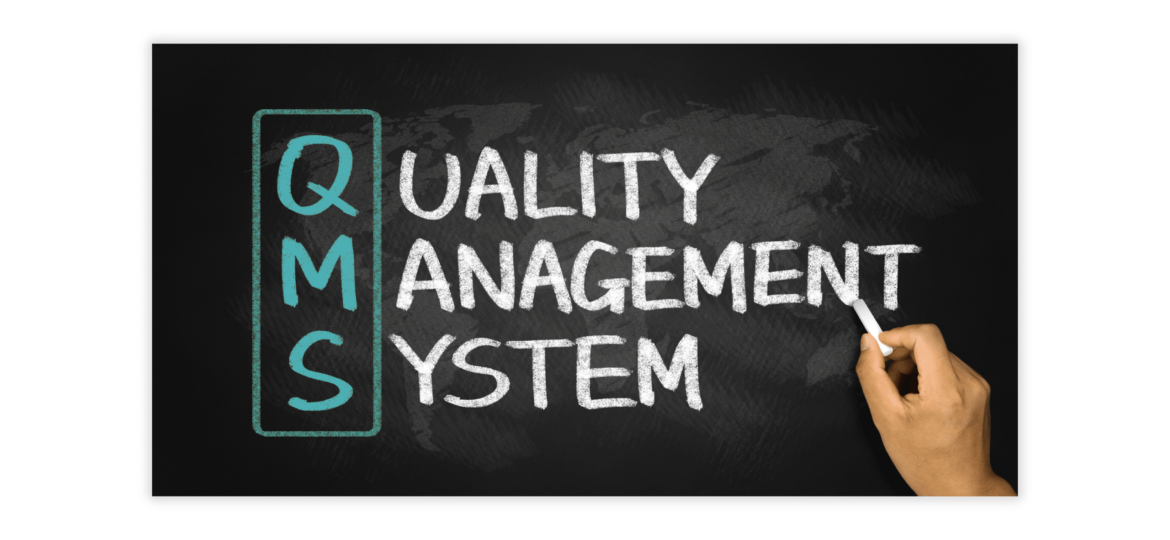
Quality Management Systems for Manufacturing and distribution organizations
As operations leaders, we are always looking for ways to reduce our overall cost of quality and increase our bottom line. To help us achieve these goals, we often look to our quality management systems (QMS). But what if our QMS is not delivering the results we’d like to see? Today, we’ll break down how to create or improve our QMS to reduce our overall cost of quality and increase our bottom line.
Is our QMS working?
Before we can answer that question, it’s important to note that there are 2 contributors to our overall cost of quality:
- Cost of Good Quality
- Cost of Poor Quality
Now, depending on what key performance indicators (KPIs) you are monitoring, you may or may not be capturing your total cost of quality. Most organizations will at the very least be monitoring their defect percentage or maybe even their cost of customer returns. Both of these would fall into the “Cost of Poor Quality” category and would not be capturing your total cost of quality.
To capture your total cost of quality, we would need to include costs for things like inspections and any possible rework associated with stopping defects internally before being shipped out to your customers.
Given all the information above, you can determine if the cost of quality that you are capturing is within the range that’s been set by your planning activities and goals.
Don’t feel like you’re failing if it’s not where you want it to be. In my experience, there are very few organizations that are currently 100% satisfied with their overall cost of quality. Meaning that even in companies with very high-quality standards and in regulated industries, there remains room for improvement.
Creating or Improving our QMS
I’ve found that it doesn’t matter if we’re creating a QMS from nothing or working on improving an existing QMS, some fundamental questions will guide us:
- What KPIs are we trying to impact?
- Who’s going to be helping us?
- What specific problem can we identify?
- What’s the root cause?
- How do we identify and implement corrective and preventative measures?
- What’s the impact of our changes?
- Have we documented all the changes?
- Have we communicated all the changes?
What KPIs are we trying to impact?
This is important to know as we cannot impact what we do not measure. That said, let’s also make sure we understand leading vs lagging indicators. There is no need to identify 10 different KPIs but 1 – 3 is a great starting point. If you already have KPIs defined, I would challenge you to think about their relevance before moving on to the next step.
Who’s going to be helping us?
Having a representative team in place is a huge help when it comes to creating or improving your QMS. As a general rule, I like to have representation from a wide range of responsibilities throughout the organization. That’s because each level of seniority and across the organization will all have different experiences and viewpoints that tend to be very helpful as we get into the next steps.
What specific problem can we identify?
It’s best if we start with 1 specific problem, preferably very recent so that we have as many details as possible available to us while we’re diving into the next steps. In this case, more is not merrier!
What’s the root cause?
To have any chance at actually solving the problem we’re investigating to ultimately impact our QMS, we have to understand and identify the root cause. One of my favorite tools for this is the 5 Whys. Take a deeper dive into the 5 Whys Method here.
How do we identify and implement corrective and preventative measures?
This is covered in more detail in the 5 Whys method referenced above but the goal here is to identify and implement measures that will prevent this particular problem from happening again in the future. I find this is where many businesses fail because not enough testing is done to ensure these measures prevent the issue from recurring.
What’s the impact of our changes?
If we successfully identified and implemented counter and preventative measures, the KPIs that we selected at the beginning of this, after some time, should show the evidence and overall effectiveness.
Have we documented all the changes?
Once it has been confirmed via KPIs that our preventative actions have had the desired outcome, we want to ensure all process changes have been thoroughly documented.
Have we communicated all the changes?
Beyond the changes being documented, we need to ensure that these changes have been communicated to the entirety of the people who are to be impacted by these changes. This is people directly touching the processes that have been changed but additionally may include people who are adjacent to the process changes. Often these folks are overlooked and new, critical defects and inadvertently created.
What about technology?
I always leave technology till last. And if you’ve followed me for any length of time, you probably already knew that! The reason is that technology is just a tool. You must have your planning, people, and processes developed and working consistently before you need to worry about implementing or fully utilizing already-implemented technology solutions.
Now, that said, there are quite a few great technologies out there to help you develop a fantastic QMS. But again, the technology itself will not save you. You need to use your people to input your processes into all of those technologies!
That’s it for this week.
See you all again next year!
Dave
Ready to see what's holding your operation back?
Take the Operations Diagnostic: your top 3 priorities, plus a quick win for each. I personally review every one and send your insights within 24 hours.
Already know you need a hand? Let's Talk → 20-Minute Strategy Call